Boiler Losing Pressure in Edinburgh - What to Do
A boiler that keeps dropping below 1 bar is one of the most common call-outs for Edinburgh heating engineers, particularly in older tenement flats and Victorian terraces where pipework has seen decades of use. The fix is sometimes a two-minute job with a filling loop. Other times it points to a leak that will only worsen through winter. Knowing the difference saves you money and prevents a cold house on the worst possible night.
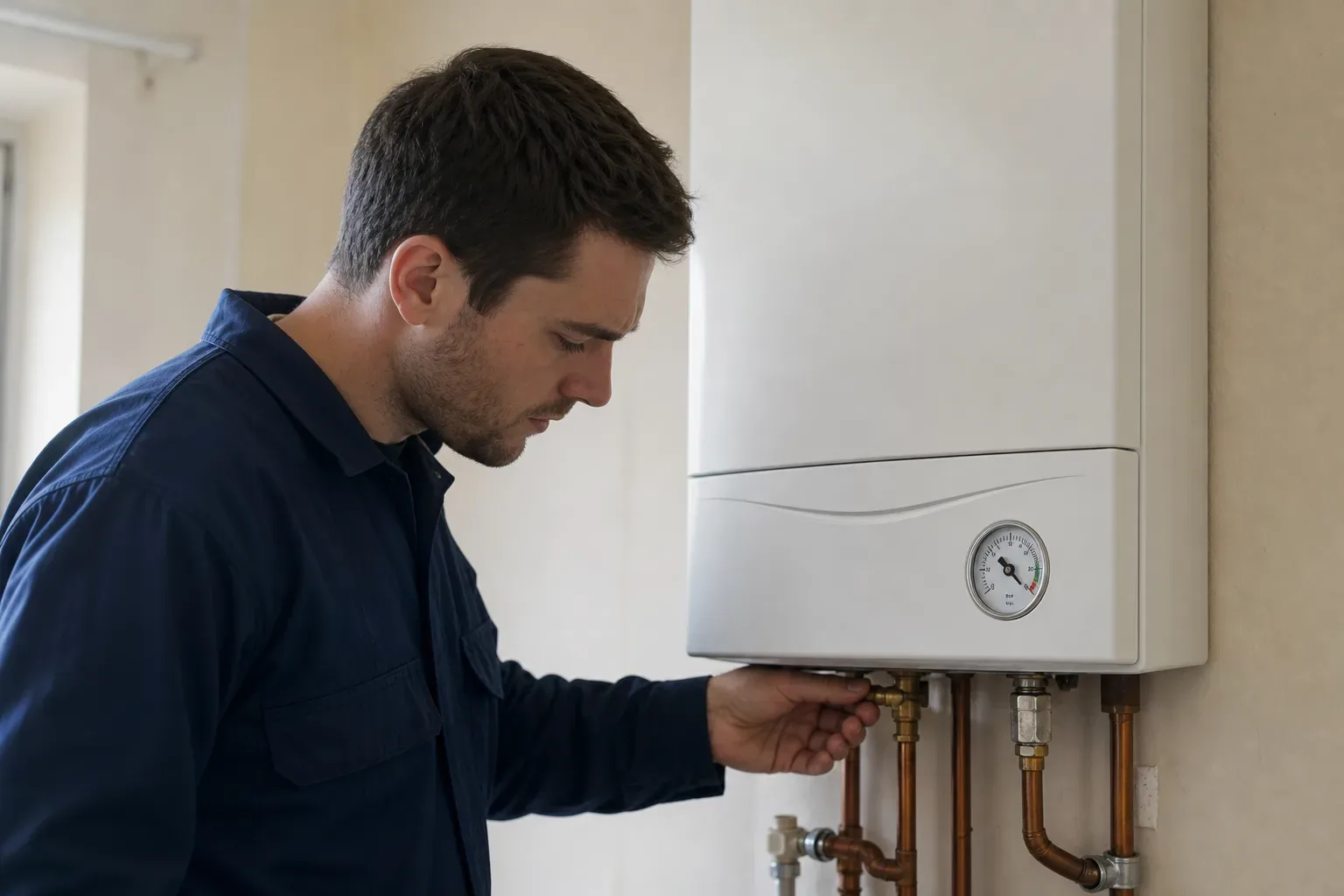
What Boiler Pressure Should Be
Most combi and system boilers in Edinburgh homes operate correctly between 1 and 1.5 bar when the heating is cold. When the system is running, pressure typically rises to around 1.8–2 bar due to heat expansion. If your gauge sits below 0.5 bar, many boilers lock out entirely and display a fault code.
The pressure gauge is usually a small dial or digital readout on the front of the boiler. Green zone means normal; red zone means action is needed. Check it when the heating has been off for at least an hour to get an accurate cold reading.
Why Is My Boiler Losing Pressure?
The two most likely causes are a small water leak somewhere in the system or a faulty pressure relief valve. A third possibility is that the expansion vessel, which absorbs pressure fluctuations, has lost its charge and can no longer do its job.
Slow Leaks in Pipework and Radiators
Leaks do not always produce a puddle on the floor. A pinhole in a radiator joint or a weeping compression fitting behind a wall can lose enough water to drop pressure by 0.3–0.5 bar overnight without leaving visible damp. In Edinburgh sandstone properties, pipes hidden within original plasterwork are a particular culprit. A Gas Safe engineer can use a pressure test and sometimes a leak detection dye to locate the source.
The Pressure Relief Valve
The pressure relief valve (PRV) is a safety device that opens automatically if pressure climbs too high. If it is faulty, it can weep water continuously even when pressure is normal, causing a slow but steady drop. The discharge pipe from a PRV usually exits through an outside wall, so check for a damp patch or a small trickle of water near where your boiler vents to the exterior. A faulty PRV needs replacing, not just closing off.
A Failed Expansion Vessel
The expansion vessel is a sealed chamber, typically inside the boiler casing, that contains a rubber diaphragm separating water from pressurised air. When the diaphragm perishes, the vessel cannot absorb the expansion of heated water, so pressure spikes and the PRV releases water to compensate. The result is pressure that seems fine cold but keeps dropping after each heating cycle. Re-pressurising the vessel's air charge, or replacing it, usually resolves this.
How to Re-Pressurise Your Boiler
Re-pressurising is a homeowner-level task and does not require a Gas Safe engineer, provided you are confident and follow the boiler manufacturer's instructions. The process uses a filling loop, which is either a short flexible braided hose that connects two valves beneath the boiler, or a built-in Keyfix connector on newer models.
- Switch the boiler off and allow it to cool for at least 30 minutes.
- Locate the filling loop. On most Edinburgh homes with a Worcester Bosch, Vaillant, or Ideal boiler, it hangs beneath the unit or is tucked behind a front panel.
- Open both valves slowly. You will hear water filling the system.
- Watch the gauge and close both valves when it reads 1.0–1.2 bar.
- Restart the boiler and check the pressure again after a full heating cycle.
If pressure drops again within a day or two, re-pressurising is not the solution. The underlying cause needs to be found and fixed.
When to Call a Heating Engineer in Edinburgh
Call a Gas Safe registered engineer if pressure drops more than once a week, if you cannot locate or use the filling loop, or if you suspect a leak. Repeatedly topping up pressure without investigating the root cause can introduce fresh, oxygen-rich water into the system, which accelerates corrosion inside radiators and the heat exchanger.
In Edinburgh, response times for non-emergency boiler repairs typically range from same-day to 48 hours depending on the season. January and February see the highest demand, so a boiler that is limping along in November is better sorted before the real cold arrives. Many local firms cover EH1–EH17 and beyond, with some offering weekend call-outs.
Signs You Need Urgent Attention
- Pressure drops to zero and the boiler will not restart after re-pressurising.
- There is visible water around the boiler or on a ceiling below a radiator.
- You hear a constant hissing or dripping from the discharge pipe outside.
- The boiler displays a fault code such as F22 (Viessmann), E119 (Vaillant), or EA 338 (Worcester Bosch).
Any of those signs warrants calling an engineer the same day rather than waiting.
What a Repair Typically Costs
A straightforward PRV replacement or filling loop repair in Edinburgh generally runs between £80 and £180 including labour and parts. Expansion vessel replacement tends to sit in the £150–£300 range depending on vessel size and accessibility. Leak tracing and repair varies widely: a radiator bleed valve is cheap, while a leak inside a floor screed can involve several hundred pounds of investigation work before a fix is even possible.
Most reputable Edinburgh heating firms charge a call-out fee of £60–£90, which typically covers the first 30–45 minutes of labour. Getting a written quote before work begins is standard practice and protects both sides.
Preventing Pressure Loss in the Future
An annual boiler service is the single most effective way to catch developing faults before they leave you without heating. A Gas Safe engineer checks the PRV, inspects the expansion vessel pressure, and examines visible pipework connections. The service usually takes around an hour and costs £70–£120 in Edinburgh depending on the company and boiler type.
If your system has not had inhibitor fluid added recently, ask the engineer to test and top it up. Inhibitor protects radiators and the heat exchanger from corrosion, which is often what causes small leaks to develop over time. A well-maintained system in an Edinburgh home can run reliably for 15 years or more without a pressure-related breakdown.
Get Your Boiler Fixed in Edinburgh Today
If your boiler is losing pressure and re-pressurising has not solved it, contact a Gas Safe registered heating engineer in Edinburgh to diagnose the fault properly. Describe when the pressure drop occurs, how quickly it falls, and whether you have spotted any moisture near the boiler or pipework. That information helps the engineer arrive prepared and often reduces both diagnostic time and your bill.
Frequently Asked Questions
How Often Should I Need to Re-pressurise My Boiler?
In a healthy system, you should rarely need to re-pressurise at all. Needing to top up pressure more than once every few months suggests a leak, a faulty pressure relief valve, or a failing expansion vessel that needs professional attention.
Is a Boiler Losing Pressure Dangerous?
Low pressure itself is not immediately dangerous, but it prevents the boiler from working and can signal an underlying fault that worsens over time. A boiler that has completely lost pressure and will not restart, or one with visible water leaking near gas components, should be assessed by a Gas Safe engineer the same day.
Can I Re-pressurise My Boiler Myself in Edinburgh?
Yes, re-pressurising via the filling loop is a task most homeowners can do safely by following the boiler manufacturer's instructions. However, if pressure drops again within a few days, stop topping it up and call a Gas Safe registered engineer to find the root cause.
How Much Does It Cost to Fix a Boiler Losing Pressure in Edinburgh?
Simple fixes such as a pressure relief valve or filling loop repair typically cost £80–£180 in Edinburgh. Expansion vessel replacement usually runs £150–£300. Leak tracing and repair varies depending on where the leak is located, and some hidden leaks can cost several hundred pounds to locate and fix.
What Fault Code Means My Boiler Has Low Pressure?
Common low-pressure fault codes include F22 on Viessmann boilers, E119 on Vaillant models, and EA 338 on Worcester Bosch units. Check your boiler manual for the exact code your model displays, as codes can vary between generations of the same brand.