No Hot Water Edinburgh - Causes and Quick Fixes
Losing hot water in Edinburgh, especially during a cold snap, is more than an inconvenience. The cause is often straightforward, and many faults can be diagnosed in under ten minutes without touching any tools. Knowing where to start saves you time and avoids unnecessary call-out fees.
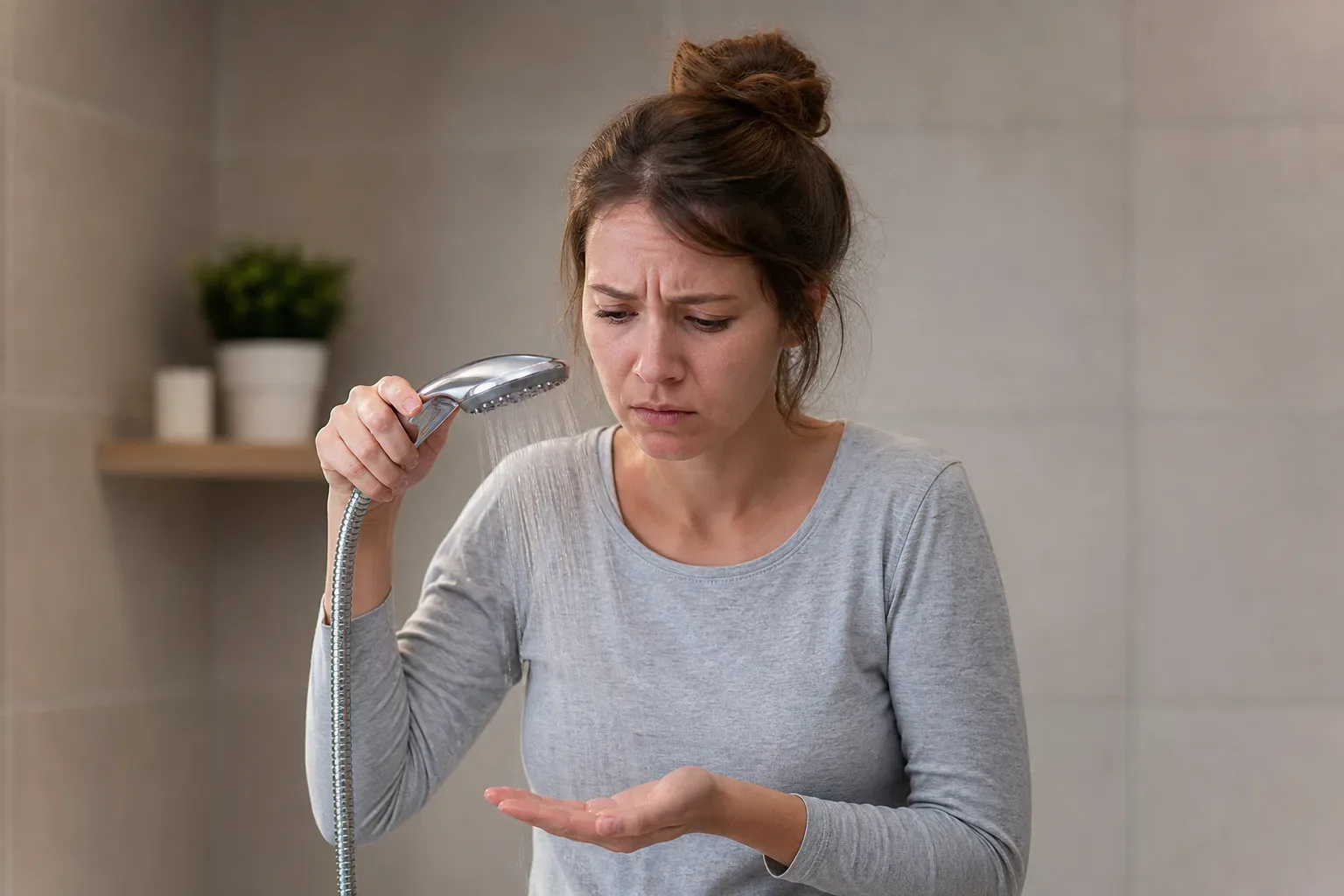
Common Reasons You Have No Hot Water
Most Edinburgh households run on a gas combi boiler, a system boiler with a cylinder, or an electric immersion heater. The fault that applies to you depends entirely on which type you have.
Combi Boiler Issues
A combi boiler heats water on demand, so if it stops working, hot water disappears immediately. The most frequent causes are a dropped boiler pressure, a frozen condensate pipe, a failed diverter valve, or an ignition fault.
Boiler pressure should sit between 1.0 and 1.5 bar when the system is cold. If the gauge reads below 0.5 bar, the boiler will lock out and refuse to fire. Topping up the pressure via the filling loop, a small flexible hose usually found beneath the boiler, often restores hot water within minutes.
Edinburgh winters can drop well below freezing overnight. The condensate pipe, which carries waste water from the boiler outside, can freeze solid and trigger a lockout fault. Pouring warm (not boiling) water over the external section of pipe will typically clear it.
System Boiler and Hot Water Cylinder
A system boiler heats water and stores it in a separate cylinder, usually in an airing cupboard. If you have heating but no hot water, the cylinder thermostat may be set too low, the motorised valve on the cylinder may have failed, or the immersion heater element inside the cylinder may have burned out.
Check the cylinder thermostat first. It should be set to at least 60°C to heat stored water properly and to prevent the growth of Legionella bacteria. If the thermostat reads correctly but the cylinder stays cold, a Gas Safe engineer needs to check the motorised valve and wiring.
Electric Immersion Heater
Some Edinburgh properties, particularly older tenement flats without gas supply, rely entirely on electric immersion heaters. A tripped circuit breaker, a blown element, or a faulty thermostat are the three most common points of failure. Check your consumer unit (fuse board) first. If the relevant breaker has tripped, reset it and monitor whether it trips again.
Quick Checks Before Calling an Engineer
Run through this sequence before picking up the phone. It takes five minutes and may resolve the problem entirely.
- Boiler pressure: Check the gauge on the front of the boiler. Below 1 bar means you need to repressurise.
- Error code: Most modern boilers, including Worcester Bosch, Vaillant, and Ideal, display a fault code on the screen. Note it down. Your engineer will want it.
- Pilot light: On older boilers, check whether the pilot light is lit. A blown pilot light needs relighting per the manufacturer's guide.
- Fuse board: For electric systems, check no circuit breakers have tripped.
- Gas supply: Turn on a gas hob ring. If it does not light, call your gas emergency line (0800 111 999) immediately rather than an engineer.
If you can see an error code and repressurise successfully, reset the boiler using the reset button and wait two minutes. Hot water should return.
When Is It a Job for a Gas Safe Engineer?
Any fault involving the gas supply, the heat exchanger, the diverter valve, or the flue must be handled by a Gas Safe registered engineer. It is a legal requirement in Scotland. Attempting gas repairs yourself invalidates your home insurance and puts your household at risk.
Specific situations that require a professional:
- The boiler keeps losing pressure and has to be repressurised repeatedly (indicates a leak in the system or a faulty expansion vessel)
- The boiler resets but fails to fire after two or three attempts
- You smell gas near the boiler at any point
- The motorised valve or pump on a cylinder system is unresponsive
- A burning smell or unusual noise is coming from the boiler
For Edinburgh residents, a qualified heating engineer can typically attend the same day for a no-hot-water fault, particularly during weekday hours. Emergency call-outs are available evenings and weekends, though the rate will be higher.
What to Expect from a Repair Visit
A diagnostic visit for no hot water usually takes 30 to 60 minutes. The engineer will read the fault code, check the pressure and temperature settings, inspect the diverter valve, and test the thermistor sensors. Most straightforward faults, a failed diverter valve, a faulty thermostat, or a seized pump, can be fixed on the same visit if the part is carried on the van.
Typical repair costs in Edinburgh currently sit in the range of £80–£150 for a standard call-out and single-part repair, though this varies with the age of the boiler and part availability. A faulty diverter valve on a combi boiler, one of the most common causes of heating working but hot water not, typically costs £150–£300 including parts and labour.
If the engineer recommends a boiler replacement rather than a repair, ask for the reasoning in writing. Boilers over 15 years old with a failed heat exchanger are generally not economical to repair.
Finding a Reliable Engineer in Edinburgh
The Gas Safe Register (gassaferegister.co.uk) lets you search by postcode to verify any engineer before they work in your home. All legitimate gas engineers in Scotland are legally required to carry a Gas Safe ID card. Ask to see it.
Edinburgh has a good supply of independent heating engineers as well as multi-trade companies covering the EH postcode area. For urgent faults, local independent engineers often respond faster than large national networks, and their rates are frequently more competitive.
Many engineers serving Edinburgh also offer annual boiler service contracts, which typically cost £60–£100 per year and include a priority call-out benefit. A boiler serviced annually is significantly less likely to fail unexpectedly, and any emerging faults tend to be caught before they cause a complete loss of hot water.
Get Your Hot Water Restored Today
If the quick checks above have not resolved the problem, contact a Gas Safe registered engineer in Edinburgh now. Provide the boiler make, model, and any fault code you can see on the display. That information allows the engineer to arrive with the right parts and fix the fault on the first visit, rather than making a return trip.
For no hot water Edinburgh faults diagnosed and repaired the same day, call or use the booking form on this page. An engineer covering your EH postcode is available and ready to attend.
Frequently Asked Questions
Why Does My Edinburgh Home Have Heating but No Hot Water?
On a combi boiler, this is most often caused by a failed diverter valve, which is the component that switches the boiler between heating and hot water modes. On a system boiler with a cylinder, the motorised valve or the cylinder thermostat is usually the culprit. Both faults require a Gas Safe engineer to diagnose and repair properly.
Can I Fix a No Hot Water Fault Myself?
You can safely repressurise a combi boiler, reset a tripped circuit breaker, and thaw a frozen condensate pipe yourself. Any fault involving gas components, including the diverter valve, heat exchanger, or gas valve, must be handled by a Gas Safe registered engineer. Attempting these repairs yourself is illegal in Scotland and invalidates your home insurance.
How Quickly Can an Engineer Reach Me in Edinburgh?
Most independent heating engineers covering the EH postcode area can attend a no-hot-water fault the same day, particularly on weekday mornings. Evening and weekend emergency call-outs are available but attract a higher labour rate. Booking early in the day gives you the best chance of a same-day fix.
How Much Does It Cost to Repair a No Hot Water Fault in Edinburgh?
A standard diagnostic visit and single-part repair typically costs £80–£150 in Edinburgh. A diverter valve replacement, one of the more common repairs, usually comes to £150–£300 including parts and labour. Costs vary depending on the boiler brand, the part required, and whether the call-out is classed as an emergency.
My Boiler Keeps Losing Pressure After I Top It Up. Is That Related to the Hot Water Problem?
Yes, a boiler that repeatedly loses pressure has an underlying fault, either a leak in the pipework, a failed pressure relief valve, or a faulty expansion vessel. Each time the pressure drops below 0.5 bar, the boiler locks out and stops heating water. An engineer needs to find and fix the source of the pressure loss rather than just topping it up repeatedly.