Power Flushing Edinburgh - Clear Your Central Heating System
What Is Power Flushing?
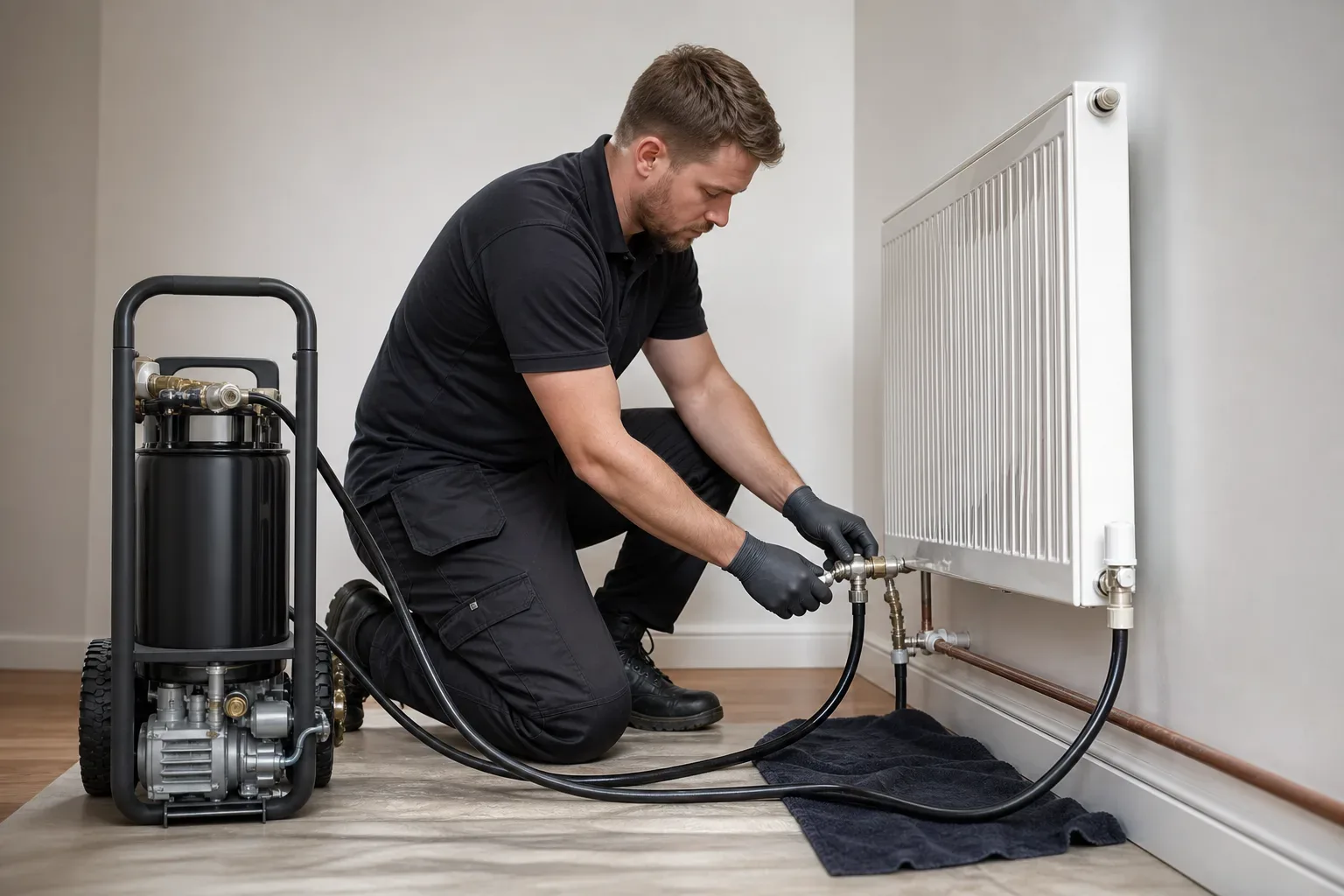
Power flushing is a deep-clean process for central heating systems. A engineer connects a high-flow, low-pressure pump to your system and circulates a chemical solution through every radiator, pipe, and the boiler itself. The solution breaks down sludge, rust, and scale that has built up over years, and the debris is then flushed out completely.
The process typically takes four to eight hours, depending on how many radiators you have and how badly the system is contaminated. A standard three-bedroom Edinburgh home with ten radiators usually sits at the lower end of that range.
Signs Your Edinburgh Home Needs a Power Flush
Cold spots at the bottom of radiators are the most common indicator. Sludge, which is a dark, muddy mixture of corroded metal and stagnant water, settles at the lowest point inside the radiator panel. You can check by running your hand across the radiator: if the top is warm but the bottom is cold, sludge is almost certainly the cause.
Other signs include:
- Noisy boiler or pipes - a banging or kettling sound from the boiler usually means scale has built up on the heat exchanger.
- Radiators cold throughout - a heavily blocked system can restrict flow so severely that heat barely reaches the radiator at all.
- Discoloured water when bleeding radiators - brown or black water coming from the bleed valve is a direct sign of sludge present in the system.
- Slow warm-up times - if it now takes noticeably longer for the house to reach temperature, flow restriction is a likely cause.
- Higher energy bills - a boiler working against a restricted system burns more gas to compensate.
Edinburgh's older tenement flats and Victorian terraces often have pipework dating back several decades. Systems of that age without regular inhibitor treatment are particularly prone to heavy sludge accumulation.
What the Power Flushing Process Involves
Pre-Flush Assessment
A qualified engineer starts by checking system pressure, running the boiler, and confirming which radiators are underperforming. A flow-and-return temperature check pinpoints the worst-affected areas before the flush machine is connected. This step prevents surprises mid-job and helps the engineer prioritise where to concentrate the flush.
Chemical Circulation
The engineer introduces a descaling and sludge-breaking chemical into the system, then runs the pump at a flow rate strong enough to disturb settled debris. Each radiator is isolated and flushed individually, and a magnetic filter on the machine captures loosened iron oxide as it circulates. The water coming out of the system will visibly darken before it runs clear.
Final Flush and Inhibitor Dose
Once the discharge water runs clear, the engineer performs a final clean flush with fresh water. A corrosion inhibitor is then added to the system. This chemical, typically a product such as Fernox F1 or Sentinel X100, forms a protective coating on the internal pipework and slows future corrosion significantly.
Post-Flush Checks
The engineer re-pressurises the system, bleeds any remaining air from the radiators, and confirms that every panel now heats evenly. Boiler flow temperatures and system pressure are checked against manufacturer settings before the engineer signs off.
How Much Does Power Flushing Cost in Edinburgh?
Power flushing in Edinburgh typically costs between £300 and £600 for a standard domestic system. The price depends on the number of radiators, the severity of the contamination, and whether additional work such as fitting a magnetic filter is included.
A rough guide:
| System Size | Approximate Cost |
|---|---|
| Up to 8 radiators | £300–£400 |
| 9–12 radiators | £400–£500 |
| 13+ radiators | £500–£600+ |
Fitting a magnetic filter at the same time adds roughly £80–£150 to the job but is strongly recommended. A filter captures iron oxide before it can re-settle, protecting both the system and the boiler.
These figures are a guide only. Get a fixed quote from your engineer before work begins.
Power Flushing vs. a Chemical Flush - Which Do You Need?
A power flush is more thorough than a chemical flush and is the right choice when sludge is already causing symptoms. A chemical flush, sometimes called a system flush, relies on the boiler's own pump to circulate the cleaning agent rather than a dedicated high-flow machine. It costs less (typically £100–£200) but cannot shift heavy deposits.
If your system is running reasonably well and you want preventive maintenance, a chemical flush may be sufficient. If you have cold radiators, noisy pipework, or a boiler that is working harder than it should, a power flush is the appropriate treatment.
Will a New Boiler Fix the Problem Instead?
Fitting a new boiler into a dirty system is a false economy. Manufacturers including Worcester Bosch, Vaillant, and Ideal all state in their installation requirements that the system must be clean before a new boiler is commissioned. Installing a boiler without flushing the system can void the warranty and will almost certainly shorten the boiler's working life, as sludge circulates through the new heat exchanger from day one.
If you are planning a boiler replacement in Edinburgh, arranging a power flush beforehand protects your investment and satisfies the installer's warranty conditions.
How Often Should You Power Flush?
Most Edinburgh homes need a power flush roughly every five to ten years, depending on system age and water quality. Fitting a magnetic filter and maintaining the correct inhibitor concentration extends the interval considerably. An engineer can test the inhibitor level using a simple water sample kit during a boiler service, which costs nothing extra if it is built into the annual service visit.
Hard-water areas require more frequent attention because scale accumulates faster. Edinburgh sits in a moderate water-hardness zone, so the risk is lower than in parts of southern England, but scaling still occurs over time without preventive measures.
Getting a Power Flush Booked in Edinburgh
Choose a Gas Safe registered engineer or a firm that specifies experience with central heating power flushing. Ask specifically whether the quote includes inhibitor dosing and a post-flush report, and whether a magnetic filter installation is offered at the same visit.
Booking during spring or early summer means the work happens before you need reliable heating again, and engineers typically have more availability outside the autumn rush. Describe your symptoms clearly when you call: cold-bottom radiators versus cold-throughout radiators versus a noisy boiler each point to slightly different levels of contamination, and a good engineer will want that detail before quoting.
An effective power flush restores system efficiency, reduces fuel consumption, and extends the working life of your boiler. Contact a local Edinburgh heating engineer today to get a fixed quote and a date confirmed.
Frequently Asked Questions
How Long Does a Power Flush Take in Edinburgh?
Most domestic power flushes in Edinburgh take between four and eight hours. A typical three-bedroom home with ten radiators usually takes around five to six hours. Heavily contaminated systems or larger properties with more radiators take longer.
Is Power Flushing Worth It for an Older Edinburgh Property?
Yes, particularly for Edinburgh's older tenement flats and Victorian terraces where pipework may be decades old. A power flush restores heat output, reduces boiler strain, and can noticeably lower heating bills. The cost is usually recovered within one to two heating seasons through improved efficiency.
Can I Stay in the House During a Power Flush?
Yes. The process is carried out by connecting a pump to an existing radiator connection or the boiler itself, so no major works are required. The engineer will need access to each radiator in turn, but there is no need to vacate the property.
Do I Need a Power Flush Before Fitting a New Boiler?
Most boiler manufacturers require a clean system before installation to validate the warranty. Fitting a new boiler into a sludge-contaminated system risks voiding that warranty and can cause the heat exchanger to fail prematurely. Arranging a power flush before the new boiler goes in is strongly recommended.
How Do I Know If My Central Heating Inhibitor Level Is Still Adequate?
An engineer can test the inhibitor concentration using a water sample taken from a radiator bleed valve. This is often included as part of an annual boiler service. If the level is low, a top-up dose of inhibitor such as Fernox F1 or Sentinel X100 is added directly to the system.