Underfloor Heating Installation Edinburgh
Why Edinburgh Homes Are Moving Away from Radiators
Radiators work, but they occupy wall space, create uneven heat that rises straight to the ceiling, and cycle on and off in ways that leave floors cold underfoot. Underfloor heating distributes warmth across the entire floor surface, so a room reaches a consistent temperature at around 28–30 °C at floor level rather than 70 °C at a single panel. That lower operating temperature is one reason it pairs so well with heat pumps, which are becoming increasingly common in Edinburgh's newer builds and retrofit projects. For anyone planning a renovation in tenement flats, Victorian terraces, or new-build properties across the city, it's worth understanding both system types before committing.
What Is Underfloor Heating?
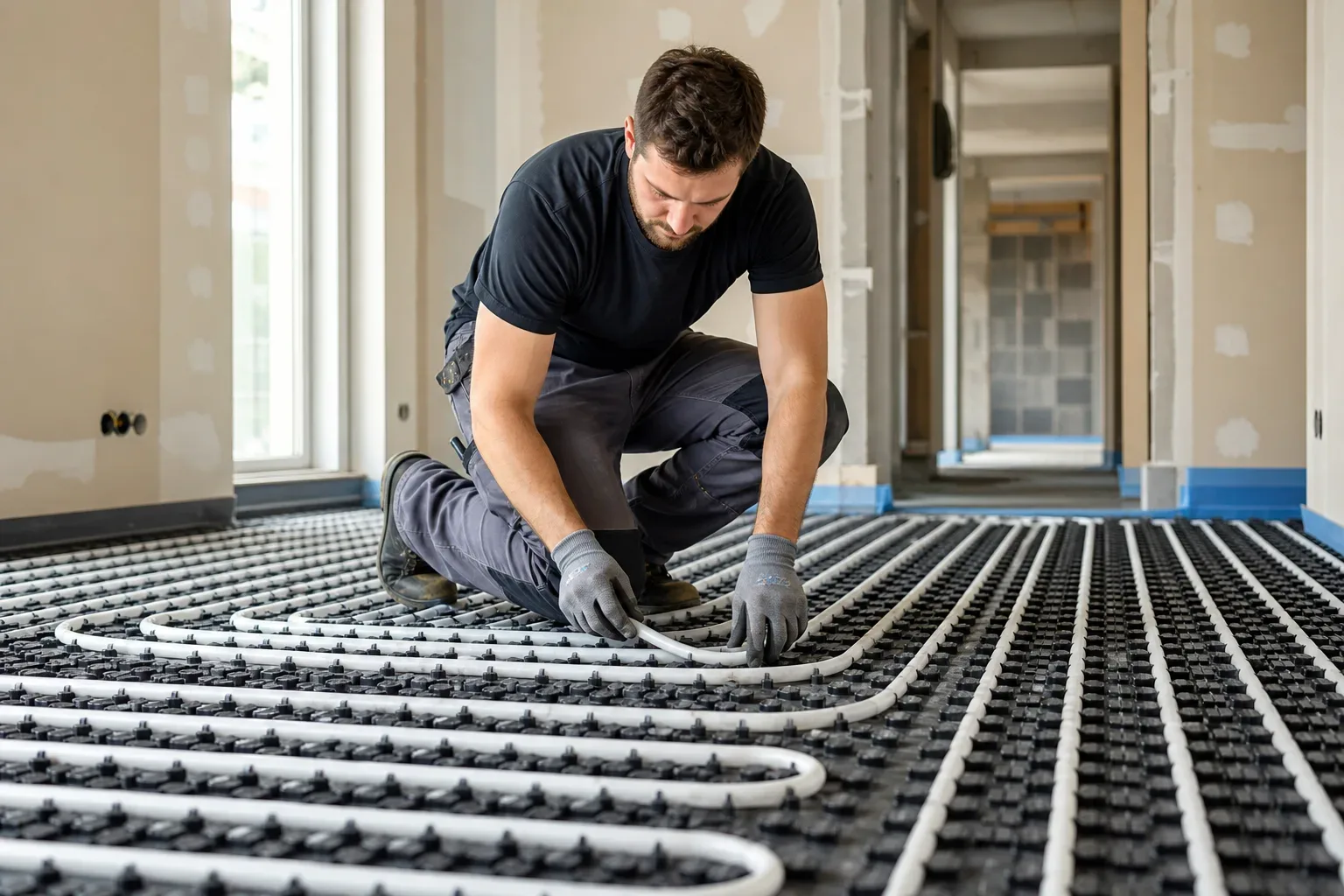
Underfloor heating is a system that circulates either warm water or electric current beneath your floor surface to heat a room from the ground up. There are two main types. Wet systems, also called hydronic systems, use a network of pipes connected to a boiler or heat pump; water circulates at low temperature through the pipe loops and radiates heat upward through the screed or subfloor. Dry electric systems use thin heating mats or cables laid directly beneath tiles, stone, or engineered timber, and connect to the mains via a thermostat.
Wet systems suit larger floor areas and whole-house installations. Electric systems are often the practical choice for a single bathroom or kitchen upgrade where lifting floors for pipework is not viable. Both types work with stone, tile, and most engineered timber flooring; solid hardwood is generally unsuitable because it expands and contracts with temperature changes in ways that cause cupping or gaps.
How Much Does Underfloor Heating Installation Cost?
Costs vary considerably depending on system type, floor area, and the amount of floor preparation required, but Edinburgh homeowners typically budget £1,800–£3,500 for a single-room electric installation and £6,000–£15,000 or more for a whole-floor wet system. Electric mat systems are cheaper upfront; a bathroom installation covering roughly 5–8 m² usually falls in the £800–£1,500 range including materials and labour. A wet system covering a ground floor of 60–80 m² involves pipe loops, a manifold, screed or specialist boards, and integration with an existing boiler or new heat pump, which pushes costs higher.
Labour rates in Edinburgh reflect the city's general cost of living, so expect to pay more per day than in rural Scotland. Floor preparation adds cost if existing screeds need removing or if timber joists need new insulation boards fitted beneath the pipe clips. An insulation layer beneath the pipes is not optional; without it, heat disappears downward rather than warming the room, and running costs rise noticeably.
Ongoing Running Costs
A wet system connected to a heat pump can cost as little as £200–£400 per year to run for a typical Edinburgh terrace, depending on tariff and occupancy. Electric underfloor heating costs more per kilowatt-hour, so it suits rooms used on a schedule rather than all-day heating. Smart thermostats, which most installers now include as standard, allow zone control and timed programmes that reduce unnecessary running time.
Is Underfloor Heating Suitable for Edinburgh's Older Housing Stock?
Yes, but the building type affects which system is practical and how much floor preparation is needed. Edinburgh has a significant proportion of older tenements and stone-built Victorian properties where floor-to-ceiling heights are fixed and lifting original floorboards requires care. In these cases, low-profile electric mats (typically 3–4 mm thick) laid beneath new tiles can be installed without affecting door clearances or floor levels. Wet systems in older properties often use proprietary panel boards with routed channels for the pipework rather than a full liquid screed, keeping the floor build-up to around 15–20 mm.
New-build properties in areas such as Leith, the Borders of the New Town, or Fountainbridge developments generally have the floor depths and insulation levels already specified to accommodate a wet system from the start. Retrofit is entirely achievable in older stock; it simply requires a surveyor's assessment of existing floor construction, joist spacing, and subfloor insulation before quoting.
What Floor Finishes Work with Underfloor Heating?
Porcelain and natural stone tiles conduct heat most efficiently and are the most compatible finish with any underfloor system. Engineered timber boards work well provided the manufacturer's maximum surface temperature rating, usually 27–29 °C, is respected and the boards are fully acclimatised before installation. Luxury vinyl tile (LVT) and similar click-lock products are generally compatible, though you should confirm the thermal resistance rating with the manufacturer before purchasing.
Carpet is possible over wet systems but reduces heat output significantly. A carpet and underlay combination with a total tog rating above 2.5 is not recommended; lower-tog carpet over a wet system is used in bedrooms by some installers, though hard floors remain more efficient. Your installer should specify the maximum floor surface temperature for each room to ensure the finish lasts without warping or joint movement.
How to Choose an Underfloor Heating Installer in Edinburgh
Look for an installer who is registered with a recognised body such as the Heating and Hotwater Industry Council (HHIC) or who holds Gas Safe registration for any work involving boiler connections. For heat pump integration, MCS certification is required to access government schemes such as the Boiler Upgrade Scheme, which was extended and adjusted in 2025 and continues to offer grant support for air source and ground source heat pumps.
Ask for a written heat loss calculation before agreeing to a quote. A proper calculation tells you whether underfloor heating alone will meet the room's demand at design conditions, or whether supplementary heating is needed. Installers who quote without this step are guessing at pipe spacing and water temperatures, which leads to systems that either overshoot or underperform. Request references from at least two Edinburgh installations, and confirm whether the quote includes pressure testing the pipework before the screed is poured, because faults found afterward are costly to access.
Get in touch with a qualified local installer today to book a site survey and receive a costed proposal specific to your property.
Frequently Asked Questions
What Is Underfloor Heating?
Underfloor heating is a system that warms a room by circulating either warm water through pipes or electric current through mats laid beneath the floor surface. Wet (hydronic) systems connect to a boiler or heat pump and suit whole-house use; electric systems use thin heating cables or mats and are well suited to single rooms such as bathrooms or kitchens. Both types heat from the ground up, providing a more even temperature than a wall-mounted radiator.
How Much Does Underfloor Heating Installation Cost?
Edinburgh homeowners typically budget £800–£1,500 for a small electric bathroom installation and £1,800–£3,500 for a larger single-room electric system. A whole-floor wet system covering 60–80 m² usually costs £6,000–£15,000 or more, depending on floor preparation, screed work, and whether the system integrates with an existing boiler or a new heat pump. Labour rates in Edinburgh are higher than rural Scotland, and insulation beneath the pipes is essential to avoid wasted heat and high running costs.
Can Underfloor Heating Be Fitted in an Edinburgh Tenement or Victorian Property?
Yes. Low-profile electric mats (3–4 mm thick) can be laid beneath new tiles without affecting door clearances or ceiling heights, making them practical for older properties with fixed floor-to-ceiling dimensions. Wet systems in older buildings use slim panel boards with routed channels for pipework, keeping the floor build-up to around 15–20 mm. A surveyor's assessment of the existing floor construction and subfloor insulation is recommended before choosing a system.
Which Floor Finishes Are Compatible with Underfloor Heating?
Porcelain and natural stone tiles are the most efficient and compatible options. Engineered timber and luxury vinyl tile (LVT) work well provided the surface temperature stays within the manufacturer's specified limit, usually 27–29 °C. Carpet is possible over wet systems but reduces heat output; a combined carpet and underlay tog rating above 2.5 is not recommended.
What Should I Check Before Hiring an Underfloor Heating Installer in Edinburgh?
Confirm the installer is registered with a recognised body such as the HHIC, holds Gas Safe registration for boiler connections, and carries MCS certification if heat pump integration is involved. Ask for a written heat loss calculation, which should determine whether underfloor heating alone meets the room's demand. Also check that the quote includes pressure testing all pipework before any screed is poured, and request references from at least two completed Edinburgh installations.