Heat Pump Installation Edinburgh - A Practical Guide
Why Edinburgh Homeowners Are Switching from Gas
Scotland's Climate Change (Emissions Reduction Targets) Act sets legally binding net-zero goals, and Edinburgh City Council has committed to becoming a net-zero city. New-build properties in Scotland are already required to meet higher fabric efficiency standards, and the pressure on existing housing stock is growing. Gas boilers are not disappearing overnight, but a heat pump installed now locks in lower-carbon heating for 20-plus years.
Edinburgh's climate is cooler and wetter than much of England, which raises a fair question about heat pump performance. Modern air-source heat pumps operate efficiently down to around -15 °C. Edinburgh's average winter low rarely drops below -5 °C, so the technology is a practical fit for the vast majority of properties here.
Air-Source vs Ground-Source - Which Suits Edinburgh Properties?
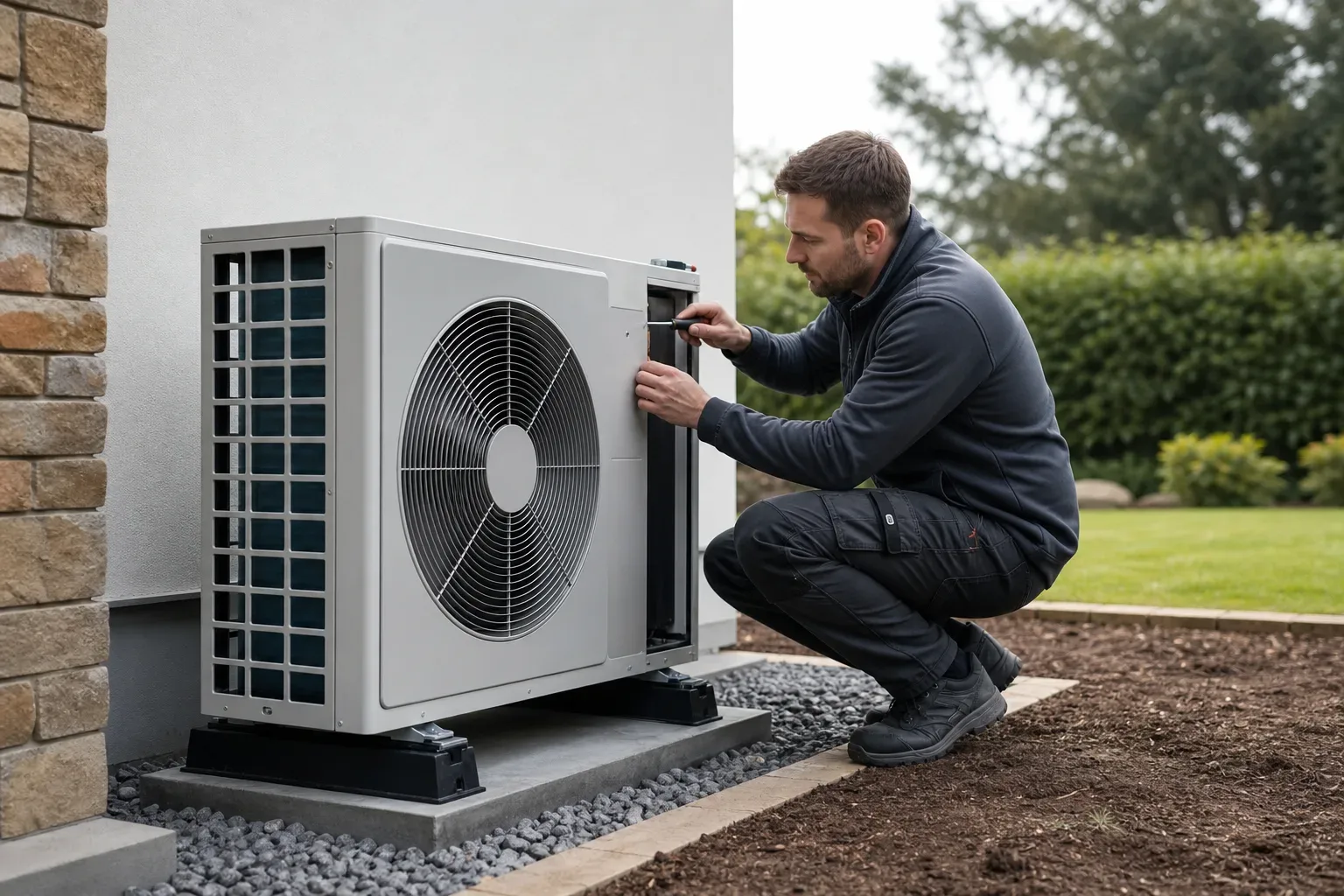
Air-source heat pumps (ASHPs) extract heat from outdoor air and transfer it inside via a refrigerant loop. They require an external unit roughly the size of a large suitcase, mounted on an outside wall or on a pad in the garden. Ground-source heat pumps (GSHPs) extract heat from the ground through buried pipes, called a ground loop, and typically need a garden area of at least 200–300 m² for horizontal loops, or a borehole if space is limited.
Most Edinburgh homes, including sandstone tenement flats and Victorian terraces, lack the outdoor land for a horizontal ground loop. For those properties, an ASHP is the realistic choice. Detached or semi-detached houses in areas like Corstorphine, Morningside, or Barnton with larger gardens may be suitable for a GSHP, though borehole drilling adds significantly to the project cost.
Flats and Tenements
Installing an ASHP in a tenement requires shared-owner consent for any unit fixed to a communal wall or roof. Edinburgh's B-listed and A-listed sandstone tenements also require planning permission, because permitted development rights are more restricted for listed buildings. Check with Edinburgh City Council's planning portal before assuming the work is straightforward.
What Does Heat Pump Installation Cost?
Supply and installation of an air-source heat pump in Edinburgh typically costs between £8,000 and £15,000 for a standard three-bedroom house, before any grants are applied. Ground-source systems with boreholes can reach £20,000–£35,000. The spread reflects differences in property size, existing radiator sizing, and whether the hot water cylinder needs replacing.
The UK Government's Boiler Upgrade Scheme (BUS) currently offers a £7,500 grant toward an ASHP or GSHP in England and Wales. Scotland has its own funding route through Home Energy Scotland (HES), which offers interest-free loans of up to £15,000 and cashback grants of up to £7,500 for qualifying heat pump installations. Stacking both a HES cashback grant and a HES loan can bring your out-of-pocket cost to well under £5,000 for a typical ASHP project.
Running Costs vs Gas
A heat pump's running cost depends on the system's Coefficient of Performance (CoP), which is the ratio of heat output to electricity consumed. A well-specified ASHP achieves a seasonal CoP of around 3.0–3.5, meaning every 1 kWh of electricity produces 3.0–3.5 kWh of heat. At current Scottish electricity and gas tariff rates, the annual bill difference narrows when the system is properly sized and the home is adequately insulated. Upgrading loft insulation and draught-proofing before installation makes a measurable difference to running costs.
What the Installation Process Looks Like
A reputable installer starts with a heat loss calculation for each room, following BS EN 12831. This determines the exact heat pump capacity needed and flags whether existing radiators are large enough. Undersized radiators are a common source of dissatisfaction with heat pump retrofits; the system works best at flow temperatures of 35–55 °C rather than the 70–80 °C a gas boiler uses, so radiators often need to be replaced with larger panels or low-temperature fan-assisted units.
The physical installation usually takes two to four days for an ASHP. The external unit is positioned, refrigerant pipework is run through the wall to an internal hydrobox or cylinder unit, and the controls are commissioned. The installer must be MCS-certified (Microgeneration Certification Scheme) for the installation to qualify for any Scottish Government grant funding. Always verify MCS registration before signing a contract.
What to Expect After Installation
Heat pumps run at lower flow temperatures for longer periods rather than short, high-temperature bursts. This means your home heats up more gradually, so longer heating schedules work better than the on/off patterns many gas boiler users are used to. Most modern heat pumps include smart controls or integrate with third-party thermostats such as Nest or Hive. Your installer should spend time walking you through the settings at handover.
Is Your Home Ready for a Heat Pump?
A heat pump performs well in a home with an EPC rating of C or above; a D or E rating usually points to insulation gaps that will reduce efficiency and increase running costs. Edinburgh's older stone-built housing stock often sits at D or E, making pre-installation insulation work a practical priority rather than an optional upgrade.
Homes with underfloor heating are ideal candidates, because the large surface area suits the lower flow temperatures a heat pump produces. Homes with only small radiators and single-pane windows will need more preparation work. A honest installer will tell you this upfront rather than overselling the system.
Finding a Qualified Installer in Edinburgh
Search the MCS installer database at mcscertified.com, filtering by postcode and technology type. Several Edinburgh-based firms hold MCS certification for both ASHPs and GSHPs. Request at least three quotes, and ask each installer to show you their heat loss calculations, not just a quoted heat pump model. A quote without a room-by-room heat loss assessment is a warning sign.
Home Energy Scotland also offers free, impartial advice before you commit to any installer. Their advisers can confirm which grants you qualify for, explain the application process, and refer you to accredited local contractors. Call 0808 808 2282 or use their online referral form to get started.
Once you have quotes in hand and grants confirmed, ask your chosen installer for a written project timeline, including any planning permission lead times for listed buildings. Getting that paperwork ordered early prevents delays once the hardware arrives on site.
Frequently Asked Questions
What Is the Cost of Heat Pump Installation?
In Edinburgh, air-source heat pump installation typically costs £8,000–£15,000 for a three-bedroom house before grants. Ground-source systems with boreholes can reach £20,000–£35,000. Home Energy Scotland offers cashback grants of up to £7,500 and interest-free loans of up to £15,000, which can bring your net out-of-pocket cost to well under £5,000 for a qualifying air-source installation.
Do I Need Planning Permission to Install a Heat Pump in Edinburgh?
Most standard air-source heat pump installations in Edinburgh fall under permitted development and do not require planning permission. However, if your property is listed (as many Edinburgh sandstone tenements are) or sits within a conservation area, you will need to apply to Edinburgh City Council before work begins. Always check with the council's planning portal at the outset.
Are Heat Pumps Efficient Enough for Edinburgh's Cold Winters?
Yes. Modern air-source heat pumps operate efficiently down to around -15 °C, and Edinburgh's average winter temperatures rarely drop below -5 °C. A well-specified system achieves a seasonal Coefficient of Performance of 3.0–3.5, meaning it produces three or more units of heat for every unit of electricity consumed, even on cold days.
What Grants Are Available for Heat Pumps in Scotland?
Home Energy Scotland (HES) offers cashback grants of up to £7,500 and interest-free loans of up to £15,000 for qualifying heat pump installations in Scotland. To access these, the installer must hold MCS certification. Call Home Energy Scotland on 0808 808 2282 or use their online referral form to confirm eligibility before committing to a contractor.
Does My Home Need to Be Insulated Before Installing a Heat Pump?
A heat pump works most efficiently in a well-insulated home, ideally one with an EPC rating of C or above. Edinburgh's older stone-built properties often rate D or E, so upgrading loft insulation and draught-proofing before installation is strongly recommended. Doing so reduces running costs and ensures the heat pump is correctly sized for your actual heat demand.